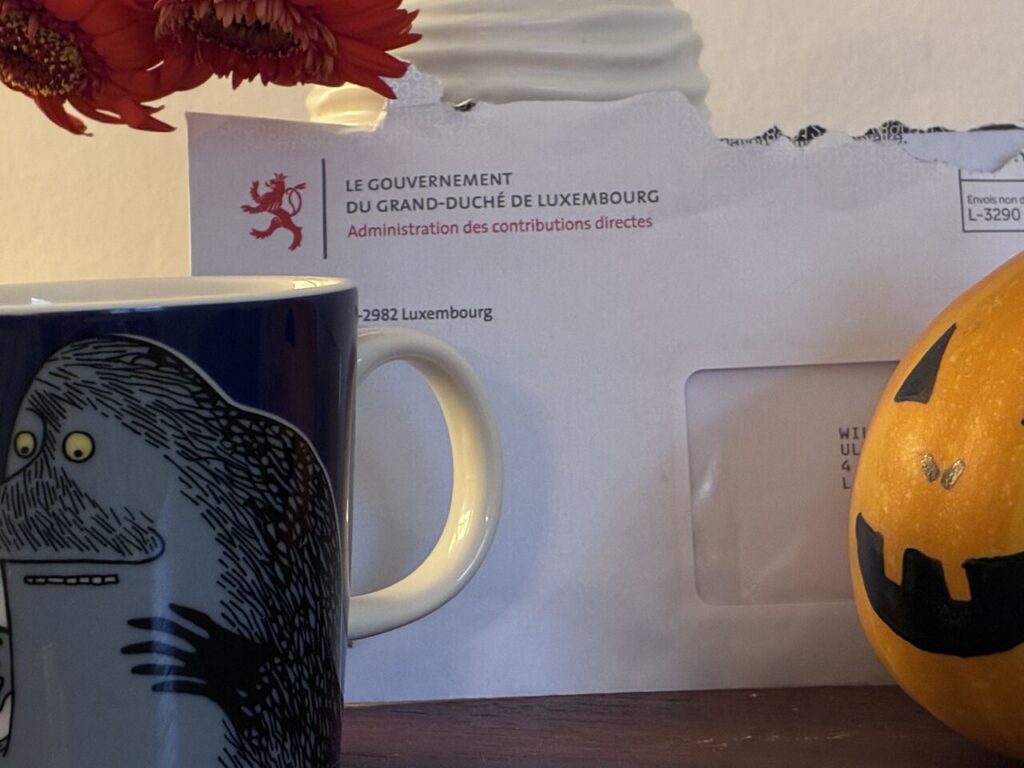
If I were to dress up as something scary for Halloween, it would probably be one of those windowed letters addressed to me by the Luxembourg tax authorities.
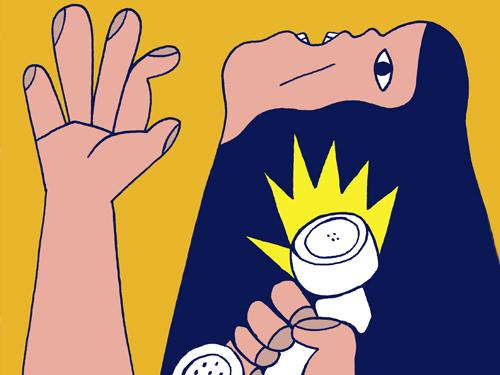
Not because I object to paying my dues. Quite the opposite. I’m annoyingly conscientious and law-abiding. But these letters reliably send me into fight, flight or freeze mode.
So do messages from teachers saying they’d like to talk about one of my children.
Both happened this week.
And that’s what I find interesting about our stress responses. Sometimes, the intensity of our reaction has less to do with the situation itself than with what we think it might mean.
A letter from the tax authorities? My brain jumps straight to having committed some terrible offence. Running a business in Luxembourg as a foreigner who is number-blind is complicated enough, even with a good accountant and every intention of following the rules.
A message about my child? Clearly, I’ve failed at motherhood.
When our interpretations trigger a threat response
Our brains don’t always wait for the facts before drawing conclusions. We interpret, anticipate and prepare for what might happen, sometimes long before we know what’s actually going on.
And when something touches a vulnerable spot in our identity, the reaction can feel surprisingly intense.
For me, it seems to be the combination of wanting to do the right thing and the possibility that I’ve somehow failed to do so. Whether that’s as a business owner, a law-abiding citizen or a mother.
The uncertainty leaves plenty of room for my imagination to get creative. And not necessarily in a helpful way.
The letter? Nothing to worry about, as usual. Though it was a bit confusing, so my accountant is on it.
The teacher’s message? My daughter is doing brilliantly in gymnastics, and her teacher wanted my permission to involve her more.
Two imagined crises. Zero actual disasters.
Knowing better doesn’t always mean feeling better
Of course, knowing that our brains can do this doesn’t necessarily stop them from doing it. We can understand our stress responses perfectly well and still find ourselves jumping to conclusions when something hits a nerve.
But perhaps there is some value in noticing the gap between what happens and the story we immediately tell ourselves about it.
A message is just a message. A letter is just a letter. Until we have more information, the worst-case scenario is still only one possible interpretation.
Anyway, back to the real crises of the world, where I usually manage to remain surprisingly cool, calm and collected.
What seemingly trivial things send your mind into a tailspin?