If you reinvented your career around midlife, what clues pointed you in the right direction – in hindsight?
Most of us miss them at the time. We are far better at noticing what we are not, especially in midlife, when many of us are sandwiched between multiple responsibilities, rising complexity, and sustained pressure.
Yet when we look back, patterns often emerge.
The Signals Were There All Along
For me, the signals showed up as offhand comments and informal feedback rather than anything captured in a performance review.
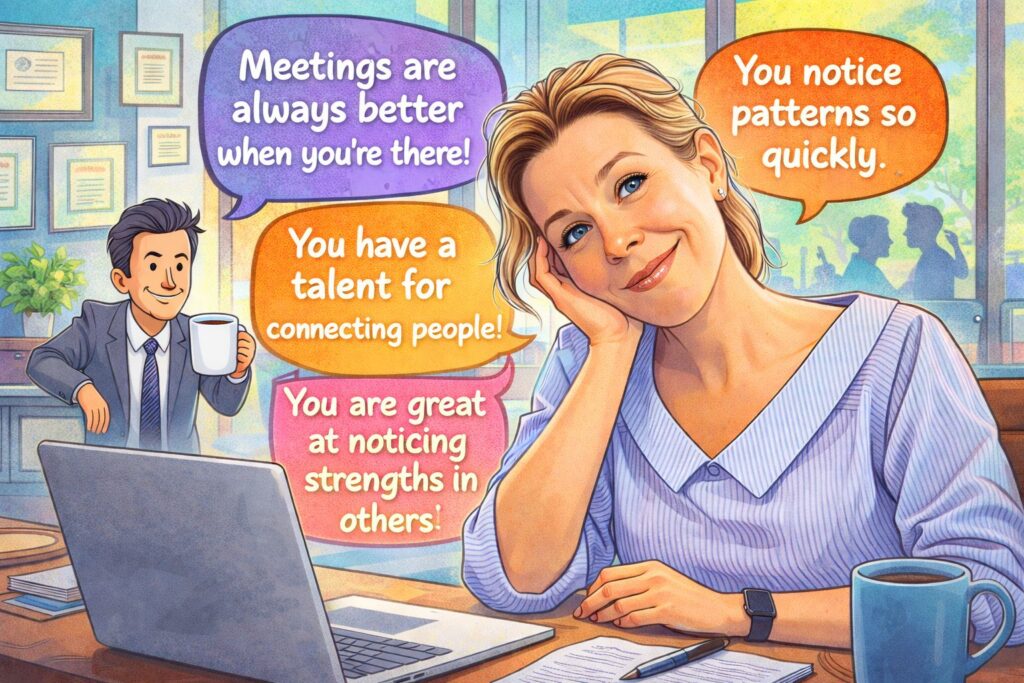
“Meetings are always better when you’re there.”
That comment led to a steady stream of invitations into meetings where I had no obvious technical expertise. I also heard that I was good at spotting themes and patterns, making others feel and look better, and acting as the glue in the room. And yes, there may have been something about struggling to stay serious and focused through multi‑hour meetings.
At the time, I dismissed all of this.
When Strengths Lack a Name
I held one of those classic Chandler Bing job titles that leaves you -and others- wondering what your formal role actually is. More importantly, I lacked the language and organisational vocabulary to recognise these capabilities as real, valuable skills.
They did not fit into any appraisal framework either. They did not fast‑track me for promotion. And they certainly did not “skyrocket” my career inside the organisation.
What they did do was help build trust and great relationships. Many former colleagues became friends for life. We supported one another through major transitions – including my eventual pivot, and theirs.
The Same Skills, Seen Differently
Today, those very same capabilities sit at the centre of how I coach, collaborate, and run my business.
What changed was not the skill set. What changed was context, language, and legitimacy.
Why This Matters Now
In a world shaped by longevity, uncertainty, and continuous change, careers stretch longer. Reinvention can no longer be treated as an exception or a failure; it needs to be normalised and improved.
Beyond major career pivots, most of us will need to evolve repeatedly – as we change, and as the world around us does. That requires getting much better at recognising transferable skills, in ourselves and in others.
Often, the signal is already there.
We simply have not learned how to listen yet.
What was a skill others saw in you long before you did?